The Principle
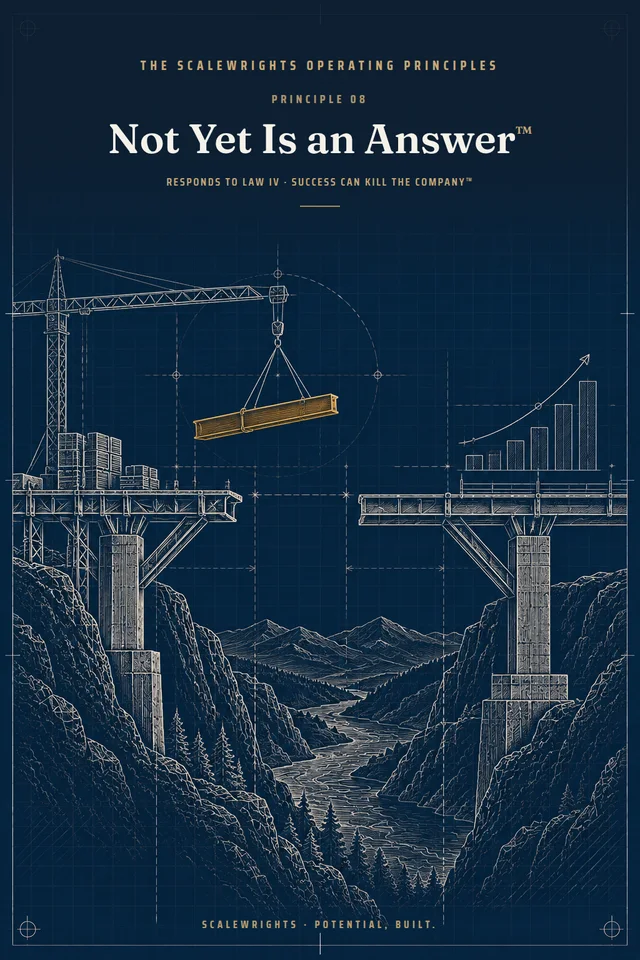
This is how I want you to operate under Law IV — Success Can Kill the Company™: not because success is bad, but because opportunity can arrive faster than your ability to finance it, produce it, deliver it, support it, and manage it.
Most founders worry about failure. What if the product doesn’t work, the retailer says no, customers don’t buy, the raise doesn’t happen? You should think about those things. But I also want you thinking about the opposite question: what happens if this works better than we expect?
Success creates load. A retailer says yes. Then another. The product starts moving, the distributor expands, the next run gets larger, the team hires, revenue accelerates. Underneath that momentum, the business can become more fragile by the week.
The most dangerous moment can look like a win
A national retailer wants the brand. Thousands of doors. The team celebrates. Now look beneath the revenue: inventory, production, packaging, freight, trade spend, deductions, forecasting, warehousing, customer service, working capital, quality exposure, leadership bandwidth, replenishment.
What does this success require from the company that the company does not currently have?
Distribution is not demand
Sell-in gets product into retail. Sell-through gets it into consumer hands. A purchase order proves a retailer is willing to stock you. It does not prove consumer pull. Doors are not demand.
Earn velocity before you chase doors. If product is not moving, more doors magnify the problem: more field inventory, more trapped cash, more markdown exposure, more promotional pressure. Did the existing doors earn the next doors?
The Scale Gap™
The Scale Gap is the distance between what the market is asking you to deliver and what the company can reliably finance, produce, deliver, and support. A widening gap shows up as rush orders, expedited freight, founder intervention, overtime, supplier favors, emergency hiring, cash stretching, quality exceptions, customer frustration, and leadership exhaustion. Opportunity has outrun infrastructure.
Success can overload all Five Capitals at once
Financial: inventory, receivables, trade spend, payroll, deposits. Operating: manufacturing, logistics, QA, forecasting, replenishment, service. Relational: retailers, suppliers, distributors, investors. Human: decisions, management, coordination, hiring, leadership. Intellectual: channel knowledge, data, regulation, institutional learning.
The opportunity may look attractive in one dimension. The burden arrives in five.
And the founder usually becomes the shock absorber. Retailer problem? You call. Production slips? You intervene. Cash tight? You find money. That is emergency stabilization, not scale. The Founder Is Not the Business.™ Success exposes weak systems — weak forecasting, informal quality, founder-controlled pricing, fragile spreadsheets, single-source dependence. Success is a stress test.
Every yes creates a claim on the company
New SKU. New retailer. New country. New employee. New distributor. New production run. Each consumes cash, attention, inventory, and management bandwidth. What are we saying no to by saying yes to this?
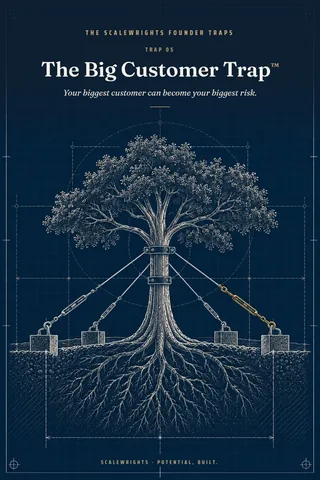
Not all revenue is good revenue. A large account may bring lower margin, higher trade spend, longer terms, more deductions, custom packaging, higher inventory, and concentration. Evaluate revenue by quality, not just size. One account at 45 percent of revenue may be fantastic and dangerous at the same time; distinguish a great customer from a critical dependency.
SKU success can create Complexity Debt™. Each extension adds MOQs, packaging, forecasts, changeovers, inventory, shelf-life exposure, and working capital. Every addition should earn the complexity it creates. Hiring can become a reflex; before hiring, distinguish a capacity problem from a structure problem.
Quality can fail under success. More volume means more runs, materials, suppliers, operators, and opportunities for error. Strengthen quality before volume materially increases. And a single-source ingredient, manufacturer, bottle supplier, or flavor house may become systemic risk at scale. Ask which dependencies became unacceptable because you got bigger.
Run the Upside Stress Test™
What if demand is 50 percent above plan? Can you replenish, fund it, maintain quality, support the plant, manage leadership load, and serve customers? Do not build a company that can only survive the base case.
Then calculate the Success Tax™ — everything you must add or absorb because the opportunity exists: working capital, people, systems, inventory, compliance, service, deductions, forecasting, quality, supplier pressure. Calculate it before celebrating the top-line opportunity.
Good growth increases cash, negotiating strength, talent, financing options, and enterprise value. Bad growth creates debt, concentration, fixed cost, and dependencies. Does the opportunity create more strategic options or fewer?
Some good opportunities should be delayed
NOT YET, until working capital is secured, a second manufacturer is qualified, margin is fixed, velocity proves out, leadership gaps are closed, or systems are ready. A delayed opportunity can be better than a failed opportunity.
GO SMALL is a success strategy. Pilot 200 stores instead of 2,000. One geography. Two SKUs instead of six. One distributor. A limited first run. Experience real success while keeping the Scale Gap manageable.
Use a Scale-Quality Score™: revenue, margin, cash, strategic, operating, concentration, and repeatability quality. A smaller opportunity with excellent quality may be worth more than a larger one with poor economics and massive burden.
Build the Success Gate™
Ask ten questions. What is the revenue opportunity? What is the Success Tax? What is the true contribution? What load hits each of the Five Capitals? What becomes the new constraint? What happens if demand is 50 percent lower? What happens if it is 50 percent higher? Does this create concentration? Does it create more options or fewer? Can we stage the commitment?
Then decide: GO · GO SMALL · NOT YET · NOT THIS.
Watch the strain indicators afterward — rush freight, forecast accuracy, complaints, fill rate, quality exceptions, founder approvals, turnover, margin deterioration, supplier concessions. They are leading indicators that the Scale Gap is widening. Measure growth and strain together, and ask whether the business is becoming stronger as it becomes larger.
The Scalewrights view
Success should improve cash generation, systems, relationships, leadership, strategic options, and enterprise value. Ask not just how much you won. Ask what the win did to the quality of the company.
Take the largest opportunity in front of your company and write seven lines: the win, the Success Tax, the Scale Gap, the first thing that breaks, the upside cash requirement, the concentration created, and the decision. If you cannot fill those lines in clearly, you do not yet understand the opportunity. Understand it before you let it become bigger than the company built to carry it.
Calculate the Success Tax on your biggest current opportunity. Write down every new obligation it creates — cash, people, systems, inventory, service — with a dollar figure beside each, within seven days.
Run the upside case. Assume demand is 50 percent above plan and name, in order, the first three things that break.
Decide GO, GO SMALL, NOT YET, or NOT THIS. Put the opportunity through the ten questions of the Success Gate in one sitting, with the numbers on the table. Do not let excitement answer the question.
The upside case is The Build Line™ Template 13, 13_Margin_Stress_Test.xlsx — contribution by channel, the three shocks (input cost, price move, volume), and break-even velocity under load — with Template 9, 09_Concentration_Map.xlsx, for the concentration a big yes creates and Template 10, 10_Supplier_Resilience_Register.xlsx, for the second source it demands, all in the Build Line workbook on Gumroad (scalewrights.gumroad.com/l/build-line). Before the doors, First Batch™ Template 7, 07_Velocity_Tracker.xlsx (scalewrights.gumroad.com/l/first-batch), shows whether the existing doors have earned the next ones.
SCALE — score the structure before the win with the Scale Readiness Check at /build-line.html.
Take the Scale Readiness Check →