Scalewrights · for beverage, supplement and packaged-goods founders
Capital follows evidence.
Practical tools, playbooks and expert reviews for founders raising capital, building a company that runs without them, or getting ready to sell. Someone is about to put a price on your company. Find the reasons they will discount it before they do.
Books from $19. A written review of your file for $1,750, flat. Start with the free five-minute check; it tells you which one you need. No success fee, no equity, ever.

Start here
Pick the moment you are in. Each door is one problem, one free check, and one next step. Nothing else on this page matters until you have picked.
The expensive way to find out
Scott has watched founders pay for each of them, from both sides of the table: as the operator who ran a nutrition manufacturer through its growth and sale, and as the investor reading the decks that come in now. None of it is exotic. It is the same six things, found by someone else, at the worst possible time.
The free check finds which of these applies to you today, in five minutes, before anyone else looks. Take it →
Start smaller
Each one is the method for one moment, with the worked example filled in and the spreadsheet templates that do the arithmetic. Instant download. Every book is included free with its Review.
You are about to pay a co-packer deposit. Know your real cost per unit, what you keep at shelf, and what the agreement should say before the money leaves. Twelve templates.
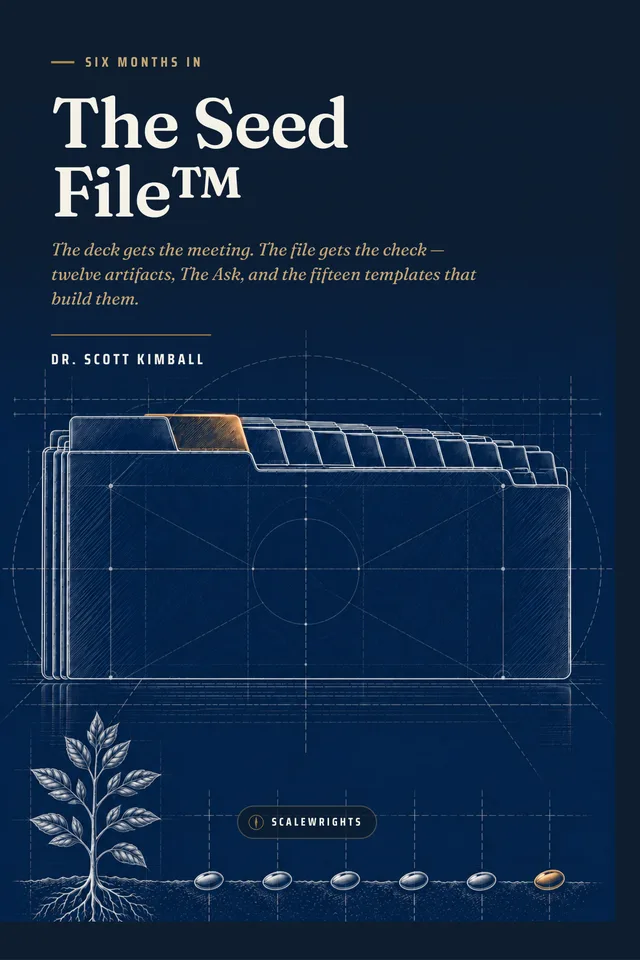
You are raising seed money and want to know what investors will find before they find it. The twelve things they check, and how to build each one. Fifteen templates.
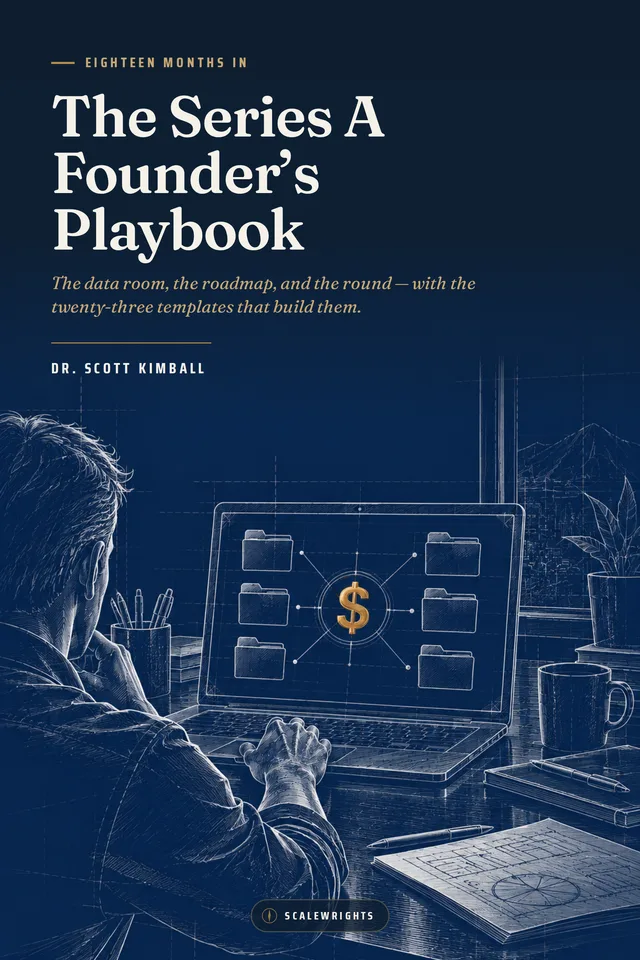
A fund is about to check whether the last eighteen months happened the way your deck says. The file that proves it, and the plan that prices the next round. Twenty-three templates.
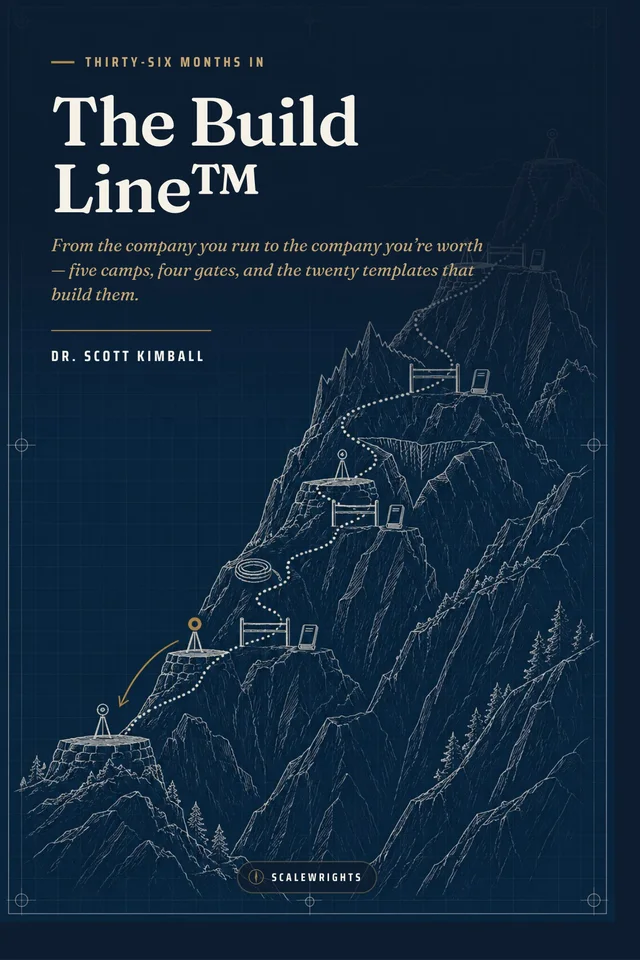
Everything still depends on you, and you can feel the ceiling. How a company learns to run a full week without its founder, and why a buyer pays more when it does. Twenty templates.
An offer is on the table, or coming. What a buyer’s team will discount in the first hour, and how to price the company yourself before you answer the letter.
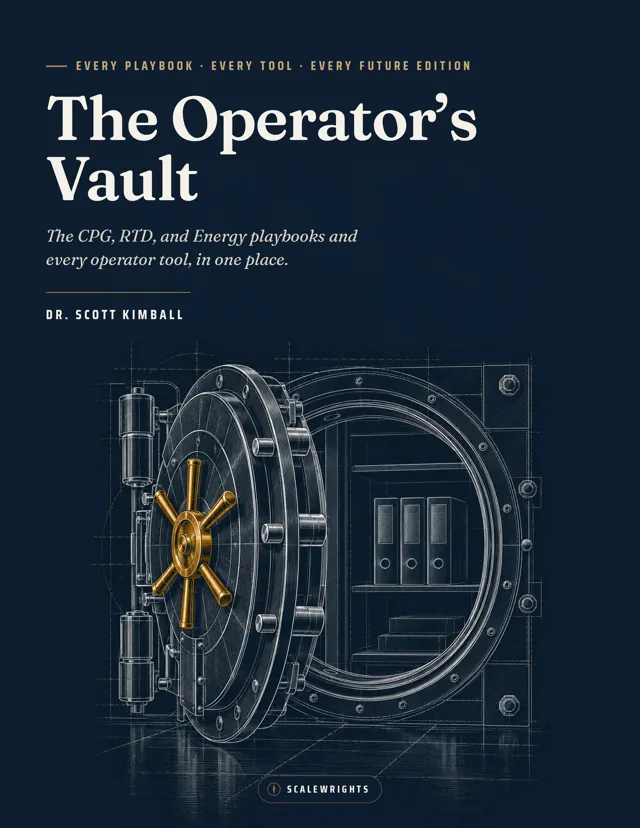
You are building in energy, RTD or packaged goods and want the category-specific numbers: formulation, margins, co-packers, distribution. All three playbooks in one.
The short reads · $19 to $39
One idea each, an evening to read, the workbook included. Where most founders start.
Why two companies with the same earnings fetch different money, and the road from the company you run to the company you are worth.
Getting everyone on the same page is a build, not a wish: the one-sheet plan a founder-led team actually runs.
Scaling the family business without losing the family: roles versus relatives, money rules, succession as a plan.
You do not build a business to sell it. You build it so well that someone insists on buying it. What a buyer actually pays for.
En español: El primer lote, $19 · Escalar con inteligencia · Familia S.A., $29 · La página
See all books and playbooks, including the category playbooks on their own →Not sure which one? Take the five-minute check and it will tell you.
How founders move forward
Every rung is the same method at a different depth, and every rung is cheaper to buy than to skip. Most founders start at the first two.
Five minutes. Your score, how the other side will read you, the three things to fix first.
Take it →The method and the templates for your moment. $199 to $499, instant download.
Shop →Scott reads your file the way the other side will, in writing, then two working sessions. $1,750 flat, book included.
Book a Review →The file and the deck rebuilt together over six to eight weeks, or the whole company measured with a roadmap. From $10,000.
Book an intro call →Scott in the room a day and a half a week, for the moves that need an operator beside you: a sale, an integration, a turnaround.
Start with an email →The work
A worked example from the Seed File™, not a client. It is here so you can see the shape of the work before you buy it. Client stories will be published only with the founder’s written consent, anonymised, with no claim about what was raised.
A beverage founder preparing a $1.5M seed raise. Three SAFEs signed at three different caps, never modelled together. Margin shown at wholesale, with the distributor’s cut, trade spend and freight left out. A use of funds that added up to the round but connected to no milestone. Retailer logos on the distribution slide that were targets, not accounts.
Seven reasons an investor would pass, in the order they would find them: the SAFE stack, the net margin under a distributor, the logos, an ask that was a round number, an unpriced valuation, an advisor grant agreed on a phone call, and no cash plan.
The cap table with every SAFE converted at three caps. Unit economics through each channel at loaded cost. A twelve-month cash plan. A use of funds in five named lines with dates and owners. The distribution slide rebuilt as a status table. A price range derived from the file.
The founder opened outreach with all twelve pages built and named the weak ones first. No promise about the outcome; that is the investor’s to decide. What changed is that every number could be checked without calling him.
Why founders trust Scalewrights
Every Review, Read and Build is done personally by Dr. Scott Kimball: twenty years as an operator, EVP of a nutrition manufacturer through its growth and its sale to private equity, then Chief People Officer of the acquirer, making six manufacturers across seven plants into one company. Since then, hundreds of founder decks read from the other side of the table, and his own checks written at seed through CLMB Ventures. You are buying his judgment, not a template.
Put my file under Scott’s red pen → Read the full background →
One email when there is something worth reading: a new tool, a page from the Library, a lesson from the other side of the table, for the moment you are in. Opens the Library today.
Capital follows evidence
The cheapest moment to fix any of this is before the deposit, before the first meeting, before the letter. That moment is usually now.