Scalewrights · the person in your building
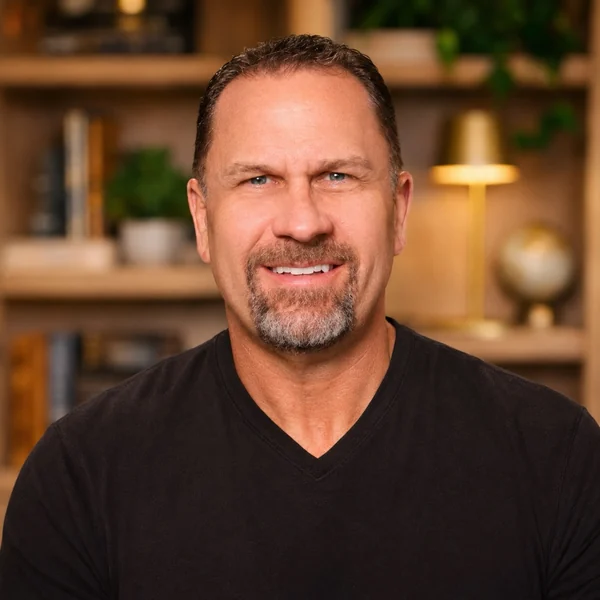
Dr. Scott Kimball. Operator, I/O psychologist, the one who has been the bad guy.
Twenty years as an operator, fourteen of them as a manufacturing executive. EVP of a company through its growth and its sale to private equity, then Chief People Officer of the acquirer, making six manufacturers across seven plants into one company. Today, operating partner inside a founder-led company. Every gate and every operating-partner day at Scalewrights is him, personally.
What he does
Two things, both from inside the building and both on a flat fee. As Integration Partner, he makes two companies one in twelve weeks: the org chart, the leadership team chosen seat by seat, decision rights, one pay structure, one cadence, a name and a date on every synergy. As Operating Partner, he holds a seat at the leadership table one day a week, on retainer, for founder-led and PE-backed companies that have a plan and nobody in the building to run it.
The work runs through three gates, in order: Structure, Stability, Direction. He does the part of a deal the industry calls soft because it cannot put it in a model, and he does it as the executive responsible, not as a consultant with a deck. The thesis behind all of it: the soft side is the hard side.
Where it comes from
The chapter most people ask about is Capstone Nutrition, where he served as Executive Vice President — sales, marketing, business development, administration and human resources — through the company’s growth and its sale to private equity. Then, as Chief People Officer of the acquirer, a Cornell Capital-backed platform, he led the work of making six acquired businesses into one company across seven plants: the integration budget, strategy, policy deployment, the compensation and benefits harmonization across 2,500 people, and the standardization of systems down to one ERP. Separately, eleven HVAC businesses brought into one platform — a roll-up, which is eleven integrations in a row, in a sector with nothing to do with manufacturing. The org chart does not care what the company makes.
His PhD is in industrial-organizational psychology. His doctoral internship was at Gallup, under Donald O. Clifton, on the research behind CliftonStrengths — the reason his method starts from what already works in a company rather than from what is broken, and the credential competitors cannot claim for the people side of an integration. He runs the plan on Hoshin Kanri: a founder’s or a sponsor’s strategy carried down to goals every level of the company can act on, alignment taken all the way to the money.
Much of the work has run in Spanish. He is fluent in English and Spanish, with years based in Costa Rica and engagements in Panama City, Guadalajara, Mexico City, Durango and Bogotá, alongside project work in England, Spain and Italy. Structure travels; the language it is built in does not change it.
The other chair
Since 2023 he has invested in early-stage companies through CLMB Ventures, reading the decks, cap tables and diligence files founders send, and sitting on the board side of the table. Most recently he architected the structure, term sheet and recapitalization behind a consumer brand’s Series A from a Fortune 500 strategic. The two hats are deliberately separate: a Scalewrights engagement is not a pitch to CLMB, and buying it does not move anyone up his list. It buys his work, not his check. He never takes equity, a success fee, or a percentage of a client’s raise, revenue or sale.
PhD, Psychology (Industrial-Organizational), Loma Linda University, 2004. MS, Psychology, Pacific Lutheran University, 2000. Doctoral internship at Gallup under Donald O. Clifton, on the research behind CliftonStrengths. Adjunct faculty, Loma Linda University, doctoral courses in organization development and change.
Capstone Nutrition: strategic advisor from 2009, VP of Human Capital, then Executive Vice President through the sale to private equity. Chief People Officer, Innovations in Nutrition + Wellness: six businesses across seven plants in the US and UK made one company. Earlier, two years with Reliance Industries in Mumbai, and a delegate on Governor Huntsman’s 2007 trade mission to India.
The doctrine, written down
The method Scalewrights works from is free in the Library: Structure first, Stability second, Direction third; the nine Laws of a company at an ownership change; UNITE, the five lines of an integration; and BUILT, the five lines of a company that runs without its owner. Before the doctrine, there were the books: nine titles and four playbooks written for the founders he operated beside, still available on the books page.
Dr. Scott Kimball on YouTube
On the channel
Plain talks on how companies, and the people inside them, reach what they are capable of. The newest episode is first; the list updates itself as new ones go live.
New episodes most weeks.
All videos on the channel →Keynotes and podcasts
Scott speaks to boards, deal teams, operating-partner groups and owner audiences on the part of a deal the model leaves out: what happens to the people, the decisions and the cadence after the ink dries. No slides-as-script, no motivational register. An operator telling a room what he has seen and what to do about it, with the numbers.
Forty-five to sixty minutes, plus Q&A, for conferences, fund annual meetings, portfolio-CEO summits, ACG and industry gatherings. Flat fee; travel billed at cost. Content tailored to the room from a 30-minute call with the organizer.
Interviews and panels on integration, the operating partner seat, founder transition and the people side of private equity. Often no fee for the right audience; say who listens and we will work it out.
The talks
- The soft side is the hard side. The signature keynote. Why deals are won or lost on aligned, disciplined people, why revenue and EBITDA are lagging indicators of how people behave, and how to run a People QoE beside the financial one. The talk → · one-sheet (PDF)
- The deal closed. The company is not. The people side of integration: why a synergy without a name is a rumor, the five lines a board checks at day one hundred, and the three gates that turn two companies into one.
- The founder cannot be the system. Why two identical income statements price at 3× and 6×, what a buyer’s team discounts in the first hour, and how a company learns to run without its owner.
- Structure first. Stability second. Direction third. One operating doctrine for every company at an ownership change, and what goes wrong when a board skips a gate.
Scott has given daily trainings to Indian business leaders as a delegate on a governor’s trade mission, taught doctoral courses in organization development, and spent twenty years presenting to boards, lenders and plant floors in English and Spanish. He is comfortable in front of 1,500 people and in front of six.
Send the date, the audience and the room: scott@scalewrights.com. Date already set and the budget approved? Book the keynote and pay the $5,500 flat fee → (secure checkout by Stripe; travel billed at cost after the event). For podcasts, a link to the show is enough: podcast invitation →. Download the speaker one-sheet (PDF). Headshots on request; verified bio below.
Verified profiles
LinkedIn · YouTube, Dr. Scott Kimball · The books. Dr. Scott Kimball (Dr. L. Scott Kimball; Larry Scott Kimball) is a Utah-based operator and investor. This page is the authoritative reference for his professional identity.
Twenty minutes on the deal, the building and whether Scott is the right person for it. No deck, no pitch.
Book a 20-minute integration call → · Integration Partner · Operating Partner