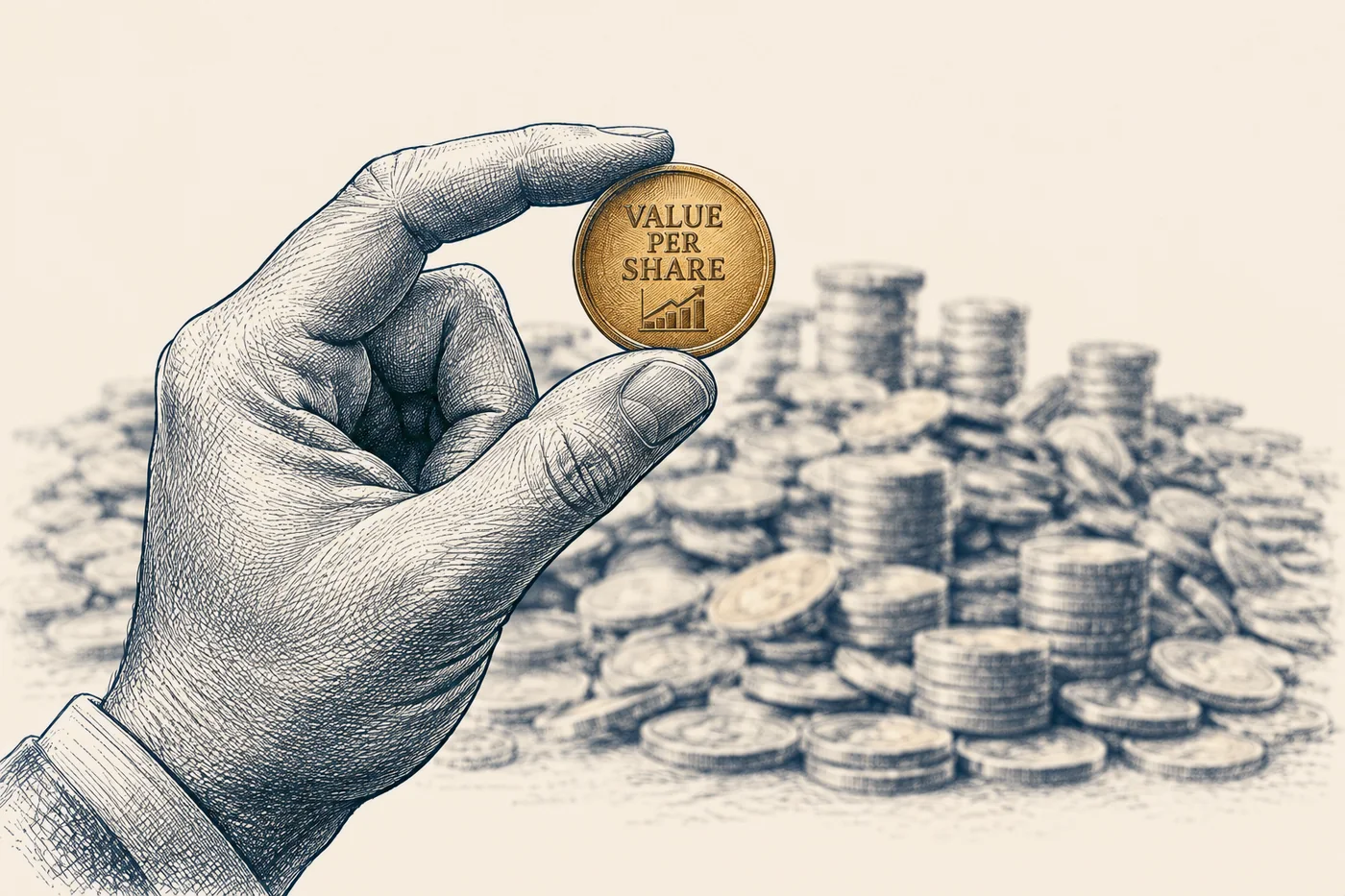
Thorndike profiled eight CEOs who wildly outperformed their peers and found their edge was capital allocation, not operational charisma. They ran lean and decentralized, prized cash flow over reported earnings, and judged every decision by a single metric: the growth of value per share.
Thorndike went looking for the best CEOs in history — not the most famous, but the ones who actually created the most value per dollar invested — and found a strange, quiet group of outsiders. They weren’t charismatic operators or empire-builders. They were disciplined capital allocators who thought like investors, ran lean, and measured success by one number almost nobody talks about: the value created for each share of the company.
The lesson lands hard on founders because it contradicts the instinct that built them. Founders are wired to grow — more revenue, more people, more offices, a bigger number to say at parties. Thorndike’s outsiders understood that size is vanity and that growth which destroys value per share is not success; it’s expensive motion. What matters is not how big the company gets, but how much value each owner’s slice is worth — and those are very different games.
◆Capital allocation is the founder’s real job
Every founder is, whether they realize it or not, a capital allocator. Every dollar of profit faces a choice: reinvest it, pay down debt, acquire something, buy back equity, or return it to owners. Most founders make these choices by default or habit; Thorndike’s outsiders made them with the cold discipline of an investor asking one question — where will this dollar create the most value per share? That question, asked relentlessly, is what separated them from peers who were busier, louder, and worth far less.
This is the lens we bring to a company preparing for a transaction. Not just “how do we grow?” but “where is capital actually creating value, and where is it being quietly destroyed?” A business that allocates capital with discipline — that prizes cash flow over reported earnings, that stays lean where lean is a virtue and invests hard where returns are real — is a fundamentally more valuable business, and a far more impressive one across the table from a sophisticated buyer.
◆Cash flow, decentralization, and the courage to be quiet
The outsiders shared a temperament worth borrowing. They focused on cash flow, not the accounting earnings that make headlines. They decentralized operations ruthlessly, pushing decisions down and keeping headquarters tiny — a structure that, not incidentally, builds exactly the owner-independent company a buyer prizes. And they had the discipline to do nothing when nothing was the value-maximizing move, resisting the pressure to act just to look busy. Rationality over showmanship, every time.
So we ask founders to change their scoreboard before they change anything else. Stop measuring the company by its size and start measuring it by the value it creates per share of ownership. Run that discipline for a few years and you don’t just get a bigger company — you get a more valuable one, built by someone who finally thinks like the investor who’s about to buy it.
- The CEO’s real job is capital allocation. Every dollar has a highest-value use — find it.
- Size is vanity; value per share is the scoreboard. Growth that destroys it isn’t success.
- Prize cash flow over reported earnings, and stay lean and decentralized.
- Think like the investor about to buy you — and build the value they’ll pay for.