Collins and Porras studied visionary companies that thrived across generations and found their leaders were clock builders, not time tellers — they built enduring institutions rather than depending on a single great idea or a single great person. The enduring ones preserve a fixed core while relentlessly stimulating progress around it.
There are two kinds of leaders, Collins and Porras argued, and the difference decides whether a company survives its creator. The time teller can look at the sun and tell you the hour — brilliant, indispensable, and gone the moment they leave. The clock builder builds something that tells the time without them, forever. Most founders are magnificent time tellers. The great ones become clock builders, usually against their own instincts.
This is the book that gave this firm its second conviction, sitting right beside the first. It is not enough to be great; greatness that depends entirely on one person is fragile, and fragile things do not last — and they do not sell. A company built to last is one that has been institutionalized: its excellence lives in systems, culture, and people, not in the founder’s head and hands.
◆Preserve the core, stimulate progress
The enduring companies, they found, hold a paradox in balance. They preserve a fixed core — a set of values and a reason for being that never changes — while relentlessly stimulating progress around it: changing products, strategies, and practices without mercy. The core is sacred; everything else is up for grabs. Founders who confuse the two either drift from what made them special or cling to habits that have long stopped serving the mission.
For a company preparing to be sold, this distinction is worth real money. A buyer pays a premium for a durable core — a franchise, a culture, a position that will survive the transition — and discounts everything that looks like it will walk out the door with the founder. Your job, before any sale, is to make painfully clear which is which: what is timeless about this company, and what was just you, improvising brilliantly for years.
◆The audacious goal, and the honesty beneath it
Built to Last also gave us the BHAG — the big, hairy, audacious goal that pulls a company forward across decades. We believe in it. But we pair it with the discipline of its sequel: confront the brutal facts of your current reality, and hold the faith that you will prevail anyway. Audacity without honesty is a fantasy; honesty without audacity is a slow decline. A company built to last needs both — the nerve to aim high and the stomach to see itself clearly.
So we ask every founder the question the book implies: if you stepped away tomorrow, what would remain? The honest answer is the real measure of what you’ve built — and the gap between it and the company you want to leave behind is the work.
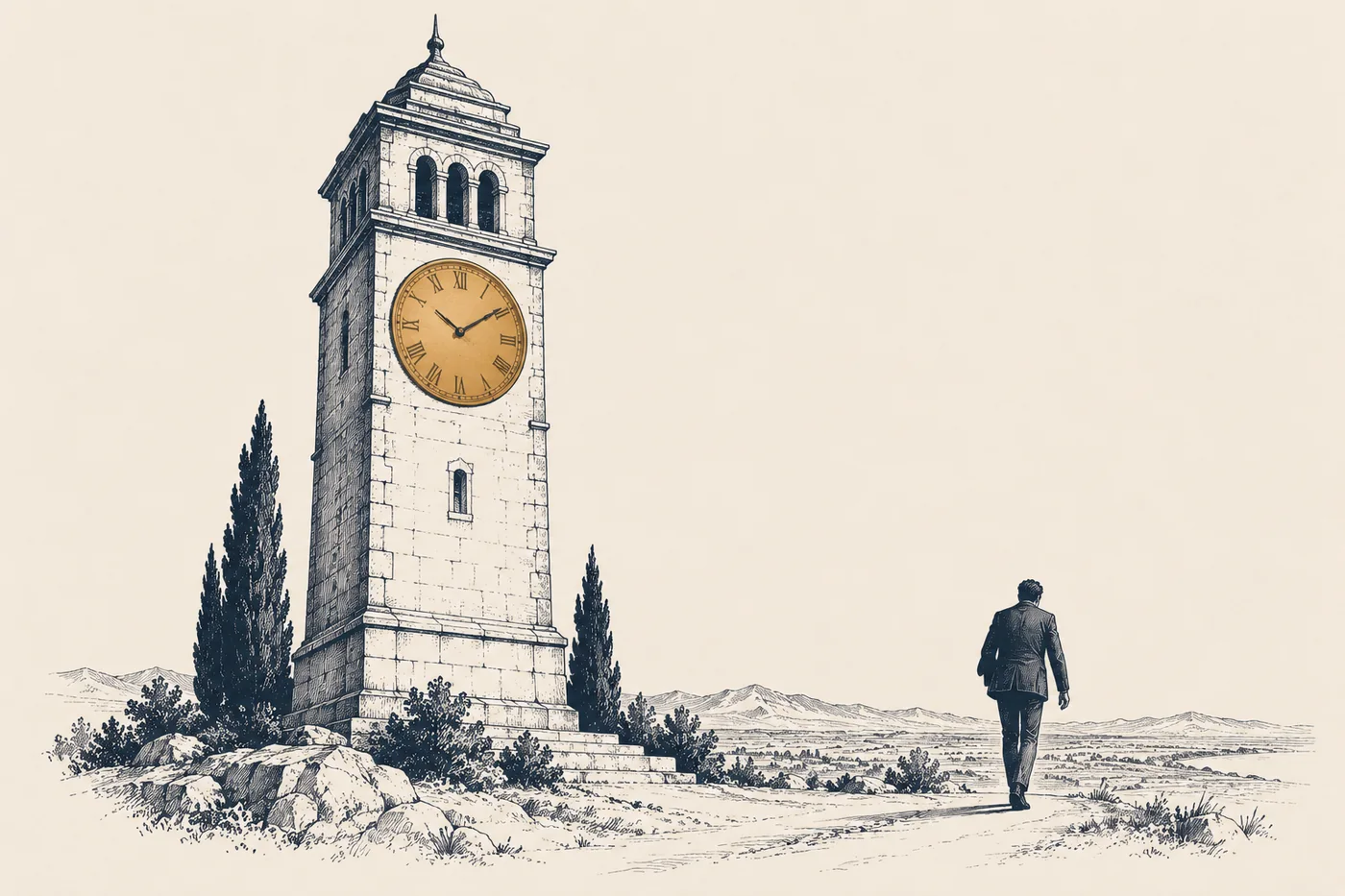
- Be a clock builder, not a time teller. Build what runs without you.
- Preserve the core; stimulate progress. Some things sacred, everything else negotiable.
- The durable core is what a buyer pays for; the founder-dependent part is what they discount.
- Aim audaciously, see honestly. A BHAG plus the brutal facts is how endurance is built.