A founder once told us his company was worth a hundred million dollars. When we asked what the number was built on, the room went quiet. There was no comp, no multiple, no earnings that could carry it — just a figure he had grown attached to. He was not lying. He simply had a dream where a valuation should be, and the two are very different instruments.
We have also sat across from the opposite founder — the one who would have signed for half of what the company could command, because a plausible-sounding buyer named a plausible-sounding number and no one had ever shown them the real range. One founder was going to be humiliated in diligence. The other was going to be quietly robbed. Both had the same problem: no strike zone.
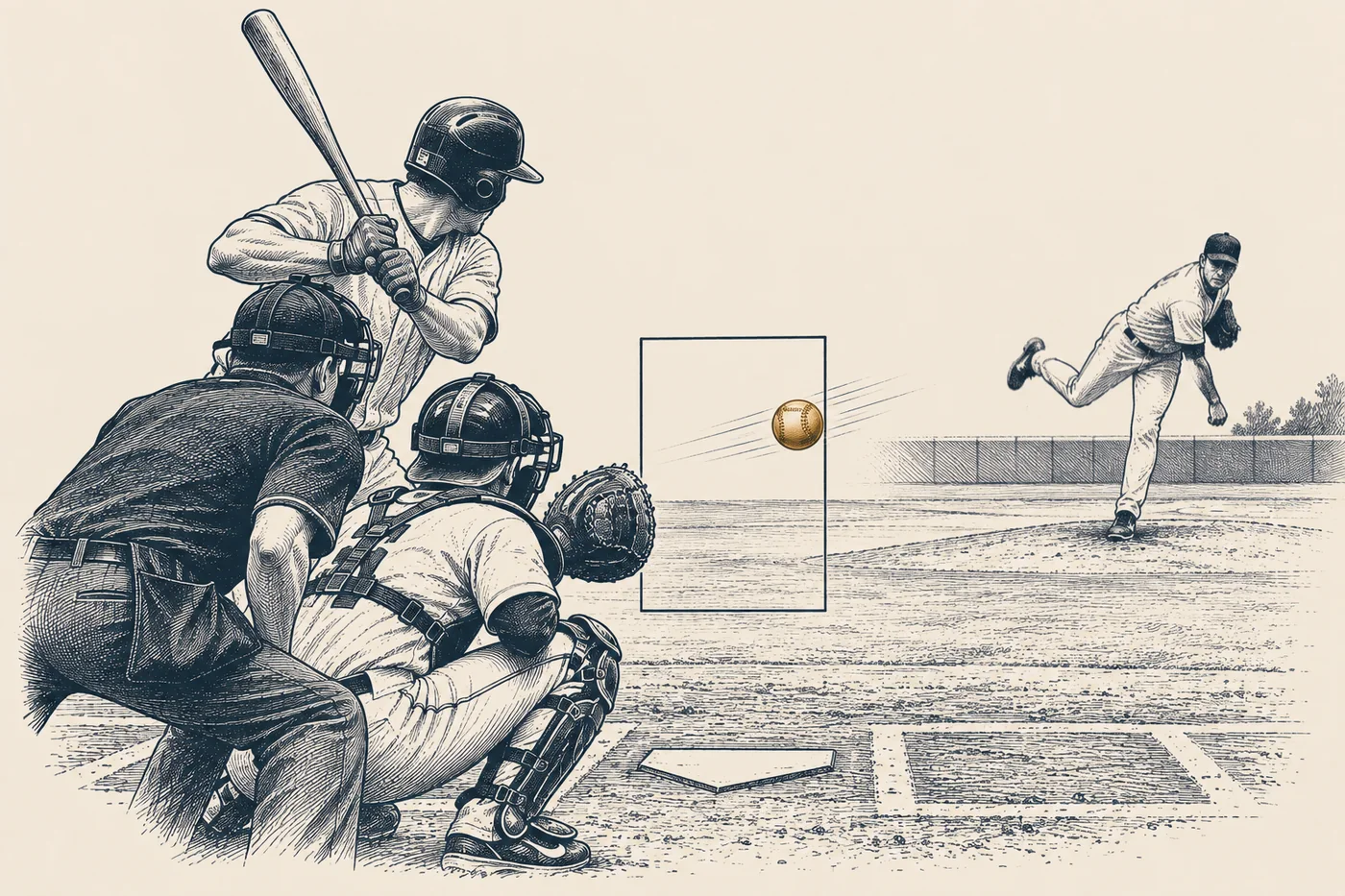
◆The strike zone is where dreams meet proof
Every company has a range where the price is real — high enough to honor what you have built, grounded enough that a buyer’s analyst cannot tear it apart. Below it, you are leaving money on the table. Above it, you are setting yourself up to be embarrassed by a spreadsheet. The strike zone is the band where ambition and evidence agree, and the entire discipline of valuation is finding it honestly and then earning the top of it.
Notice what the strike zone is not. It is not the lowest number a buyer can talk you into, and it is not the highest number you can say out loud. It is the defensible one — the price you can walk into any room and hold, because it is built on real earnings and a real multiple, not hope and not fear.
◆Why the honest number wins the deal
Founders assume the aggressive number is the strong negotiating position. The opposite is true. An indefensible ask does not intimidate a sophisticated buyer — it disqualifies you. The moment your price cannot survive the first question, the buyer stops seeing a serious counterparty and starts seeing an amateur to be managed, and they reprice not just the number but their whole opinion of you.
A number you can defend does the reverse. It signals that you know exactly what you have, that diligence will confirm rather than deflate it, and that there is no soft spot to push on. Precision is leverage. The founder who says “here is the number and here is precisely why” negotiates from strength; the one who reaches for a fantasy negotiates from the moment it collapses.
- Overshooting gets you embarrassed; undershooting gets you robbed. Both come from missing the zone.
- A valuation is a case, not a wish — built on earnings and a multiple you can point to.
- Precision is leverage. A number that survives the first question wins the room.
- Aim for the top of the defensible range, then build the proof that earns it — don’t invent a range above it.