Ask a founder what their business is worth and you will get one of two answers, and both are wrong. Some quote a number far above anything they could defend. Others quote one far below what they could command. The truth is almost never the one in their head — and the gap, in either direction, costs them a fortune.
Here is the uncomfortable mechanic of it: the market does not pay you for what you are worth. It pays you for what it can verify. Value that only you can see is value the buyer discounts to zero, because a buyer prices risk, and everything they cannot confirm is risk. Your margins might be excellent — but if they cannot be traced through clean statements, the buyer assumes the worst and pays for the worst.
This is why two nearly identical companies sell for wildly different prices. Same revenue, same sector, same growth — but one is legible and one is not. One can hand a buyer proof of every claim it makes; the other asks the buyer to take its word for it. Nobody pays a premium on a promise. The legible company gets the number; the opaque one gets the apology.
◆Undershooting is not humility. It is a leak.
We spend as much time with founders who undervalue their companies as with those who overvalue them, and the quiet ones worry us more. They have built something genuinely strong and are prepared to sell it for a fraction of its worth — not because a buyer beat them down, but because they never assembled the evidence that would have let them ask for more. They leave millions on the table and call it being reasonable.
Being underpaid for a great company is not modesty; it is an unmanaged risk, the same as being overleveraged. The value existed. It simply expired unclaimed because no one built the case in time.
◆Closing the gap is a project, not a hope
The good news is that the space between worth and price is not fixed. It is a punch list. Every item a buyer cannot verify is a line on it, and every line can be closed: the add-backs proven, the revenue shown to be durable, the concentration explained, the process documented. Close enough of them and the discount the market was applying to your risk simply dissolves — and the number moves toward the truth.
That is the work. Not talking the market into a higher opinion of your company — building the proof that makes the higher number the obvious one.
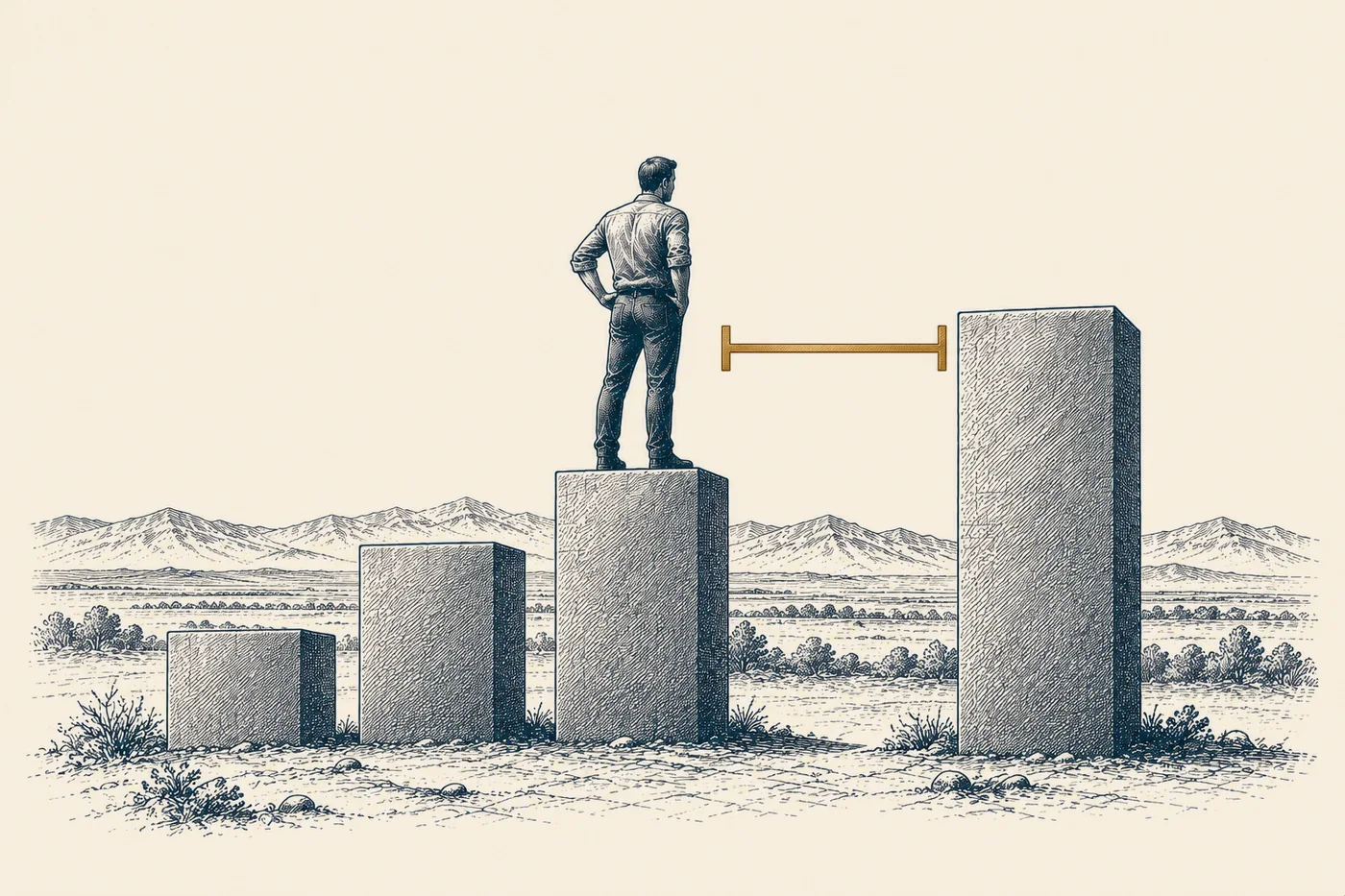
- Worth and price are different projects. One is what’s true; the other is what you can prove. We work on the second.
- Every unverified claim is a discount the buyer applies automatically, whether or not it’s fair.
- Undershooting is a leak, not a virtue — an unmanaged risk with your name on the invoice.
- The gap is a punch list, and punch lists get closed.