Operating Capital is whether the company runs as a system rather than on the founder’s will: clear owners for every outcome, capacity that holds under load, and a real operating rhythm. Harnish’s Scaling Up supplies the frame — master the four decisions (People, Strategy, Execution, Cash) on a disciplined cadence.
There is a test that decides whether operating capital exists: take two weeks away and tell no one how to reach you. If the company hums, you have built a machine. If it floods your phone and quietly waits for you to return and restart it, you don’t have operations — you have heroics, performed daily by a founder who has become the single most important and most fragile part of the system.
Harnish studied thousands of companies trying to scale and found that operations reduce to a small number of things done with discipline. The one that matters most for our purposes is execution: does the work happen through systems and clear ownership, or through the founder catching every ball that gets dropped? A company scales — and survives a sale — only when the answer is systems. Heroics produce good quarters; systems produce a business.
◆One owner per outcome, and capacity that holds
The tells are specific, and a buyer looks for every one. Does every important outcome have a single, clear owner — or is it “shared,” which means it belongs to everyone and therefore to no one? We have watched a founder cut his own span of control from fifteen direct reports toward eight, giving real leads real authority, and watched the company get stronger for it. Is there capacity to absorb growth, or is the company already running on fumes, one big order away from breaking? Is rework low, or is margin quietly pouring onto the floor because quality depends on who happened to do the job?
Under all of it sits the least glamorous and most decisive thing: rhythm. The priorities set each quarter, the handful of numbers watched each week, the meeting cadence that keeps a growing company aligned instead of drifting into a hundred private versions of the plan. It is dull. It is also the difference between a company that scales cleanly and one that just gets bigger and more chaotic — and chaos, at sale, reads as risk.
◆The machine is the asset
Here is the reframe that changes how a founder builds: the machine is the thing you’re selling. Not the product, not this quarter’s revenue — the repeatable system that produces them. Every process you document, every outcome you give a clear owner, every decision you push down with real authority is a part of that machine, and a piece of value that survives your departure. A buyer isn’t paying for how hard you work. They’re paying for how well it works when you don’t.
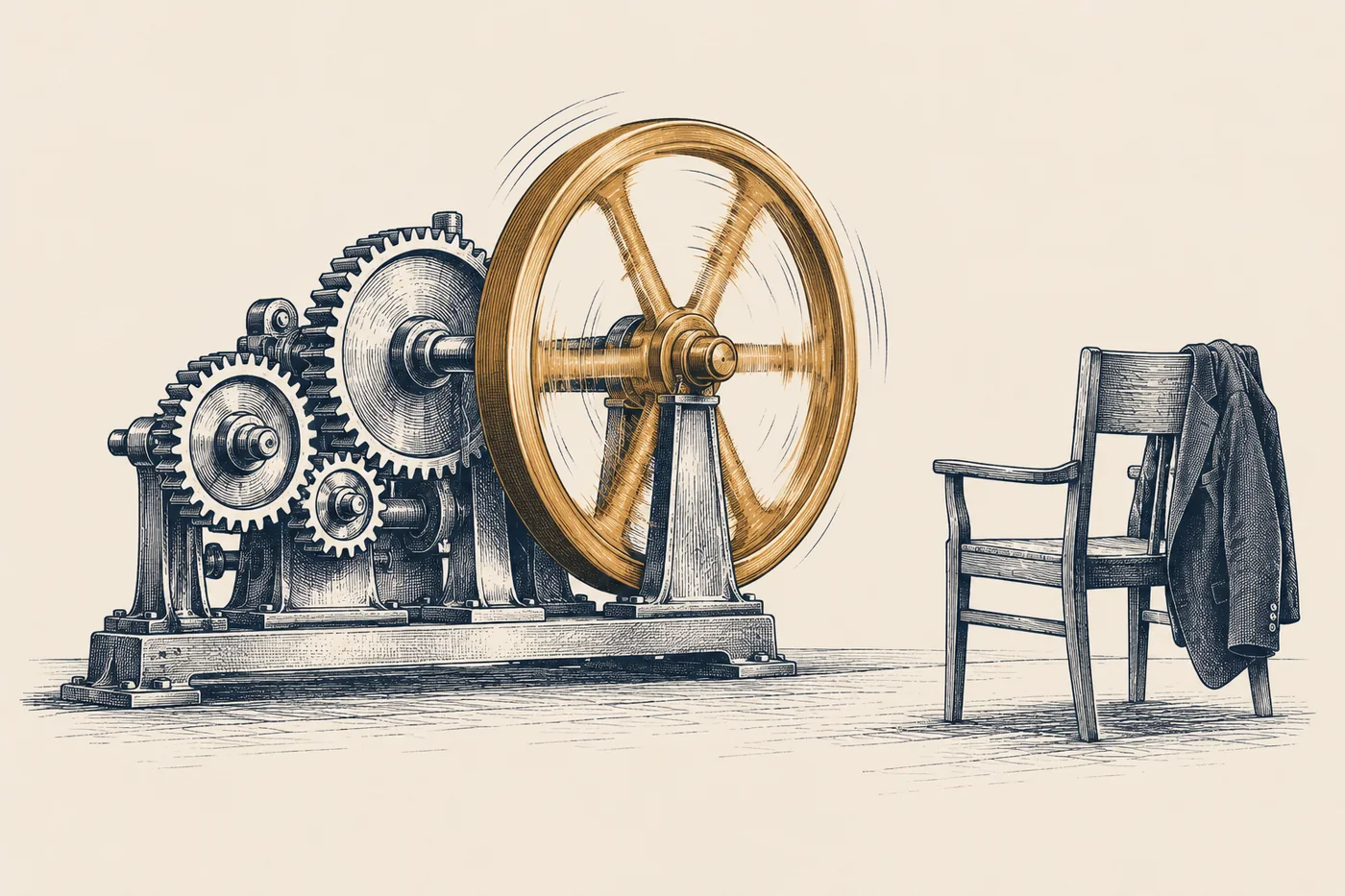
- Heroics don’t scale or sell. The value is in the system, not the founder’s effort.
- One owner per outcome. “Shared” means no one owns it — and a buyer sees the gap.
- Capacity and low rework are what let growth land without breaking the company.
- Rhythm beats inspiration. Priorities, metrics, and cadence are how execution actually compounds.