Covey’s second habit — begin with the end in mind — is the discipline of defining your destination before you act, so that every step is measured against where you actually want to arrive. Effectiveness comes from aligning today’s choices with the end you’ve deliberately chosen, not the one you drift into.
Of all Covey’s habits, one belongs on the wall of every founder who intends to one day sell: begin with the end in mind. He meant it as a principle for a well-lived life — imagine the eulogy, then live toward it. But turn it on a company and it becomes the single most valuable strategic discipline a founder can practice, and the one almost none of them do.
Here is the quiet tragedy we see again and again. A founder spends fifteen years building a company with no clear picture of how it ends — no defined exit, no target buyer, no number, no readiness. Then one day exhaustion or an unsolicited offer forces the moment, and they scramble to sell a company that was never built to be sold. They began with the grind and hoped the end would take care of itself. It rarely does.
◆The end defines the work backward
Beginning with the end changes everything upstream of it. If you know you want to sell to a strategic acquirer in five years at a specific multiple, that end reaches back into today and reorganizes your priorities. It tells you which revenue to build (the durable, recurring kind a buyer rewards), which risks to close (the concentration, the founder-dependence), which systems to document, which story to sharpen. The destination is what makes today’s choices legible. Without it, you are just busy.
This is the spine of everything we do. The Strike Gauge exists to define the end in a number you can defend. The Re-Rate 180 exists to build backward from it, methodically, so the company that arrives at the finish is the one the end required. We are, in the most literal sense, Covey’s second habit turned into a consulting method: name the end, then build every day toward it.
◆Endings you design beat endings that happen to you
There is a world of difference between an exit you designed and an exit that happened to you. The designed exit is calm, prepared, and priced at the top of the range because the company walked in ready. The accidental exit is a fire sale in slow motion — reactive, under-prepared, and quietly robbed of the value the founder spent years creating but never positioned to capture. Same company, wildly different endings, decided by whether anyone began with the end in mind.
So we ask the question early, when it’s still a strategy and not a scramble: what does the end look like, and what is it worth? Answer it clearly, and every day between here and there gets a direction. Leave it blank, and you’ll get an ending anyway — just not one you chose.
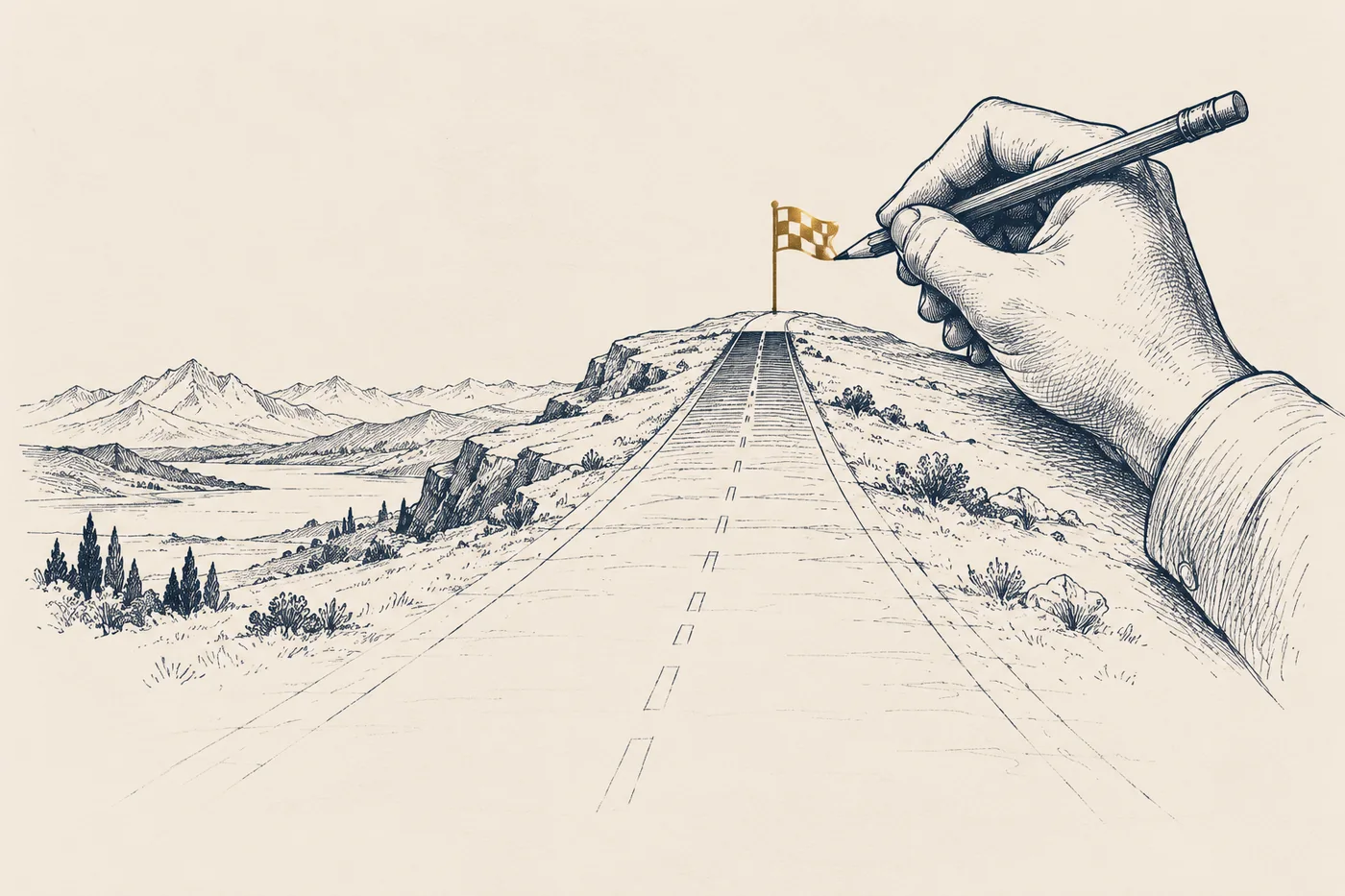
- Begin with the end in mind. Define the finish before you build toward it.
- The end reaches backward. A clear destination reorganizes today’s priorities.
- Most companies aren’t sold — they’re exited badly by founders who never named the end.
- A designed exit is priced at the top; an accidental one is a slow fire sale.